
The findings of the report showed consumer spending falling for the first time in over four decades in 2017-18. The government has, however, termed it a "draft" report, reports Somesh Jha.

In the draft rules, among 681 listed professions, armed security guards, supervisors, surveyors, and carpenters (class I) are proposed to be treated as highly skilled professionals; electricians, tailors and drivers are skilled; cooks and cobblers as semi-skilled and dairy coolies, office peons and sweepers as unskilled.
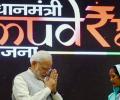
After taking benefit of the scheme, jobs increased by around 11 mn in establishments that took loans.
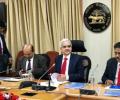
'Overall, domestic demand has moderated significantly. 'The weakening of private consumption, which for long has been the bedrock of aggregate demand, in particular, is a matter of concern,' RBI Governor Shaktikanta Das said in the MPC meetings, in October.

Part of the dues has been pending since 1995-96 - the inception year of the Employees' Pension Scheme administered by the EPFO. The Centre also owes the EPFO more than Rs 1,000 crore towards the minimum pension scheme it had notified in September 2014.

The government would be ironing out issues related to the controversial 'bail-in' clause in the earlier Bill, explore hiking the deposit insurance cover of customers, and decide whether the resolution framework should apply to public sector banks.

PSBs have been requested to reach out to MSMEs to provide bill discounting to them against their dues since they suffer the most from shortage of cash.

The interest offered is mostly 0.5 to 1 per cent more than what other banks offer. Moreover, customer service and long-term association spanning generations are also other reasons for the popularity.

Only when the RBI inspection started on September 19 did they realise that their game was up and one of them had sent a letter to the central bank, leading to the RBI crackdown, report Anup Roy and Subrata Panda.

Business activity contracted in Q2 FY20, the first contraction since 2013-14 and the second since the 2008 global financial crisis, report, Abhishek Waghmare and Anup Roy.

According to draft Code on Social Security, 2019, gig and platform workers will be entitled to life and disability cover, health and maternity benefits, among others.

Payment aggregators should have a minimum net worth of Rs 100 crore and if they don't manage to arrange that money within one year of putting out final guidelines, they should stop doing their business, says central bank's draft paper.

PSB chiefs tried to argue that liquidity is in surplus in the system and the problem was related to lack of demand in the economy, instead of banks' reluctance to lend, but 'the FM said it is a perception issue that loan is not available, which we need to dispel,', reports Somesh Jha.

The NDA government will be following the footsteps of its predecessor, the UPA, which had introduced the concept of "loan mela" to boost credit by directing banks to lend to people through public meetings.

In the latest draft of the Code on Social Security Bill, 2019, the government has decided to stick to the current thresholds for providing social security benefits to workers by industry.

The government is set to ask PSBs to expeditiously introduce repo-rate linked products "to step up affordable credit".

The rise in bond yields would make it difficult for banks to pass on rate cuts as except for retail loans, most of their legacy portfolio are linked to marginal cost based lending rate, which takes into consideration bond yields.

Non-banking financial companies, that used to comprise at least 70 per cent of the issuance in the corporate bond market, are witnessing a credit freeze as investors shun bond issued by lower-rated firms.

The Malegam committee on the RBI's capital adequacy had suggested that the RBI must move away from its methodology to calculate the foreign exchange gains to a weighted average cost-based valuation method. Central bank may done away with provisioning requirements, to enable higher transfer of surplus in the 2017-18 fiscal, analysts say.

All public sector banks have moved to such a regime voluntarily, while private banks are yet to. The state-run banks have introduced repo-linked products for floating-rate home and auto loans, but the RBI said loans to micro, small and medium enterprises (MSMEs) should also be linked to an external benchmark.
 © 2025 Rediff.com - Investor Information - Advertise with us - Disclaimer - Privacy Policy - Sitemap - Feedback - About us - Terms of use - Grievances